LOCATION: Lafayette, California | ZONE: 9b
HOME LAB: Dena Rochelle | Seul Terre Founder
HARDSCAPE: existing
SOFTSCAPE: ever evolving
EXTRA OOMPH: Rafael’s Landscaping
PLANT MATERIAL | Agavaceae, Anacardiaceae, Asteraceae, Asparagaceae, Cactaceae, Crassulaceae, Cupressaceae, Fagaceae, Geraniaceae, Grossulariaceae, Lamiaceae, Myrtaceae, Poaceae, Proteaceae,
Existing: Quercus agrifolia | Coast Live Oak, Quercus lobata | Valley Oak
NEW highlights: Acacia aneura | Mulga, Agave titanota Titan 'White Ice’, Cupressus cashmeriana | Kashmir Cypress, Astelia chathamica 'Silver Shadow' | Silver Spear, Eremophila Nivea | Silky Eremophila Emu Bush, Maireana sedifolia | Pearl Bluebush, Tanacetum haradjanii | Silver Tansy, and Eucalyptus macrocarpa | Desert Malee Rose of the West, among many others, including some yet to be known.
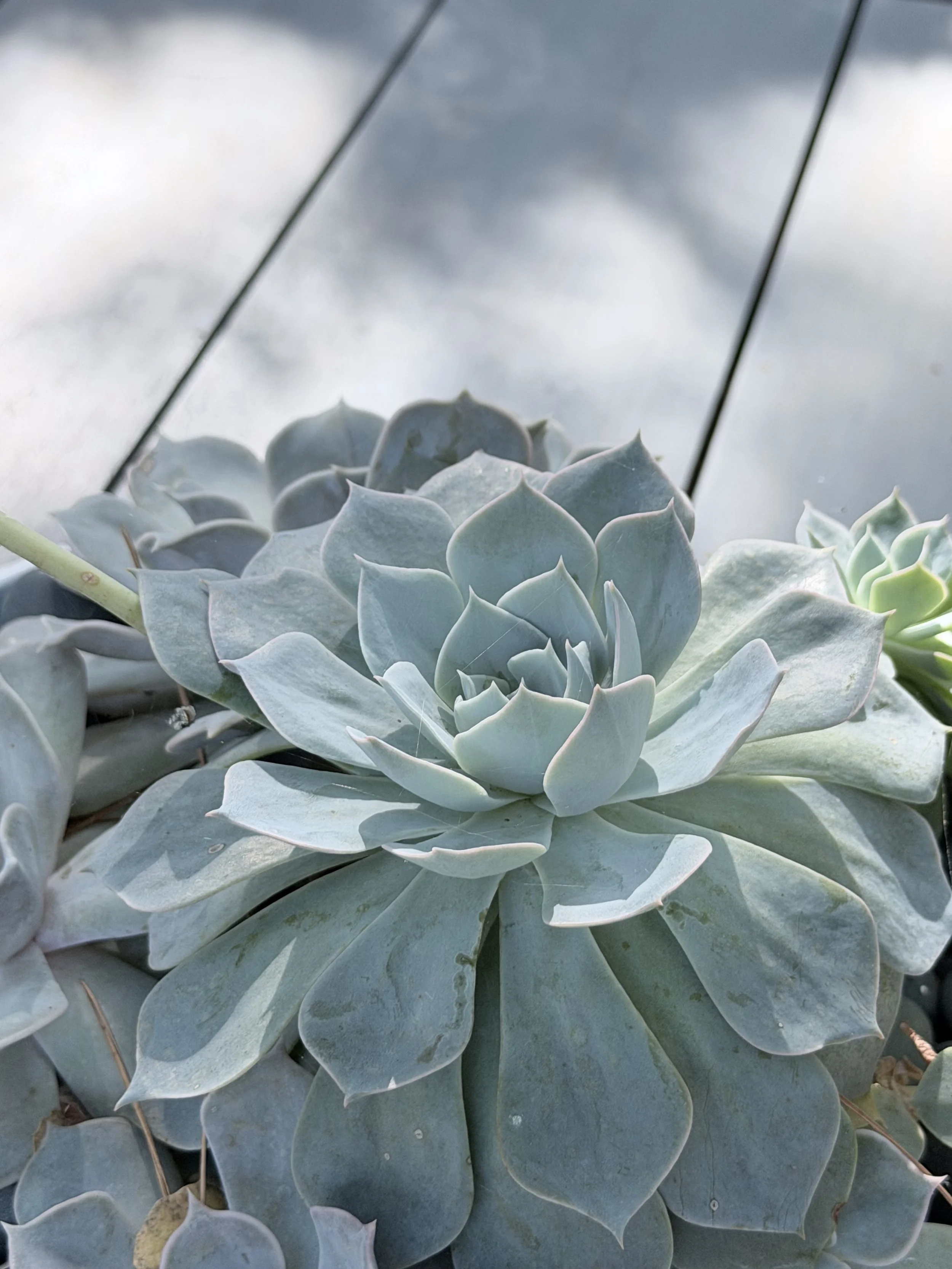
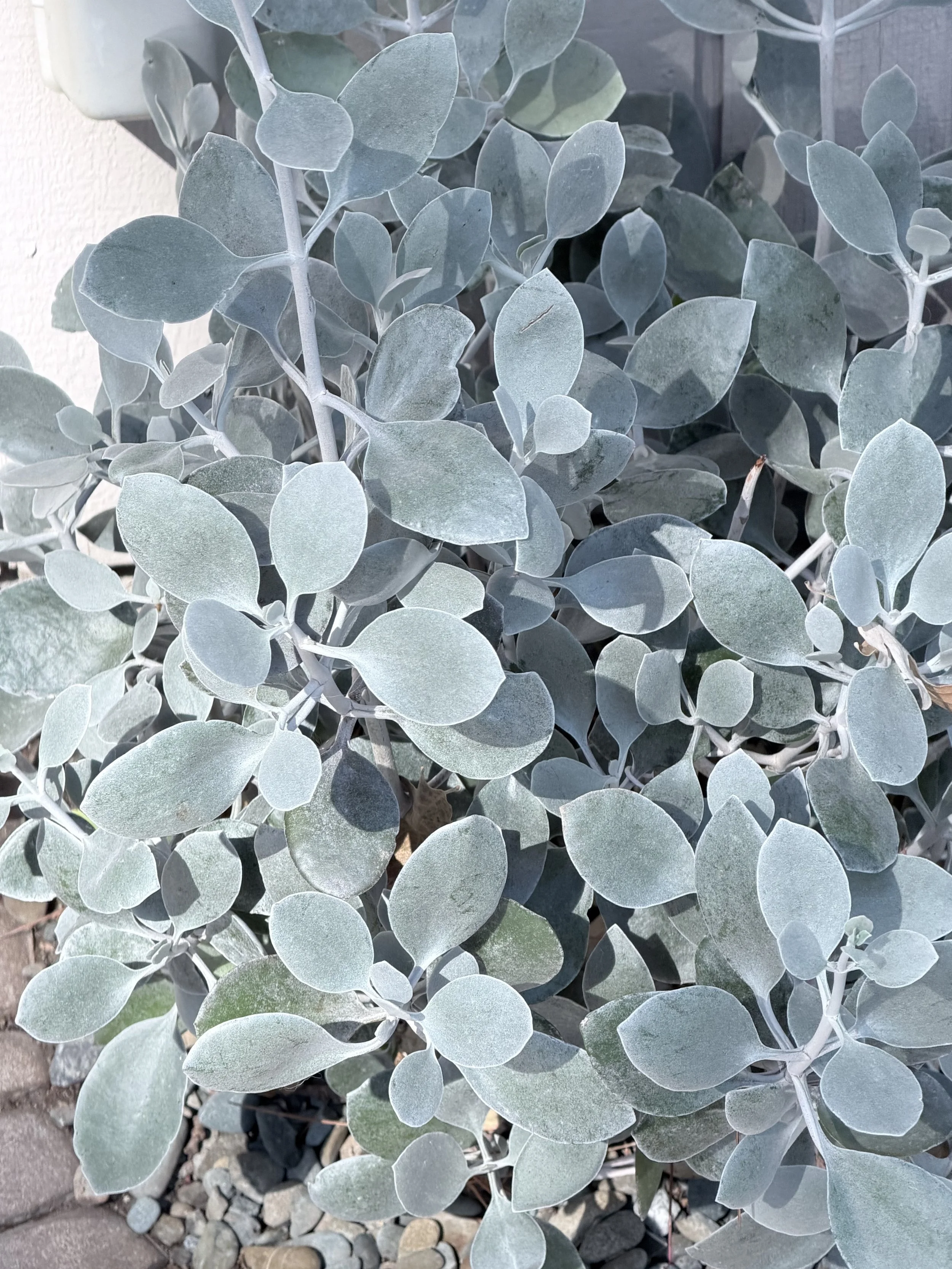

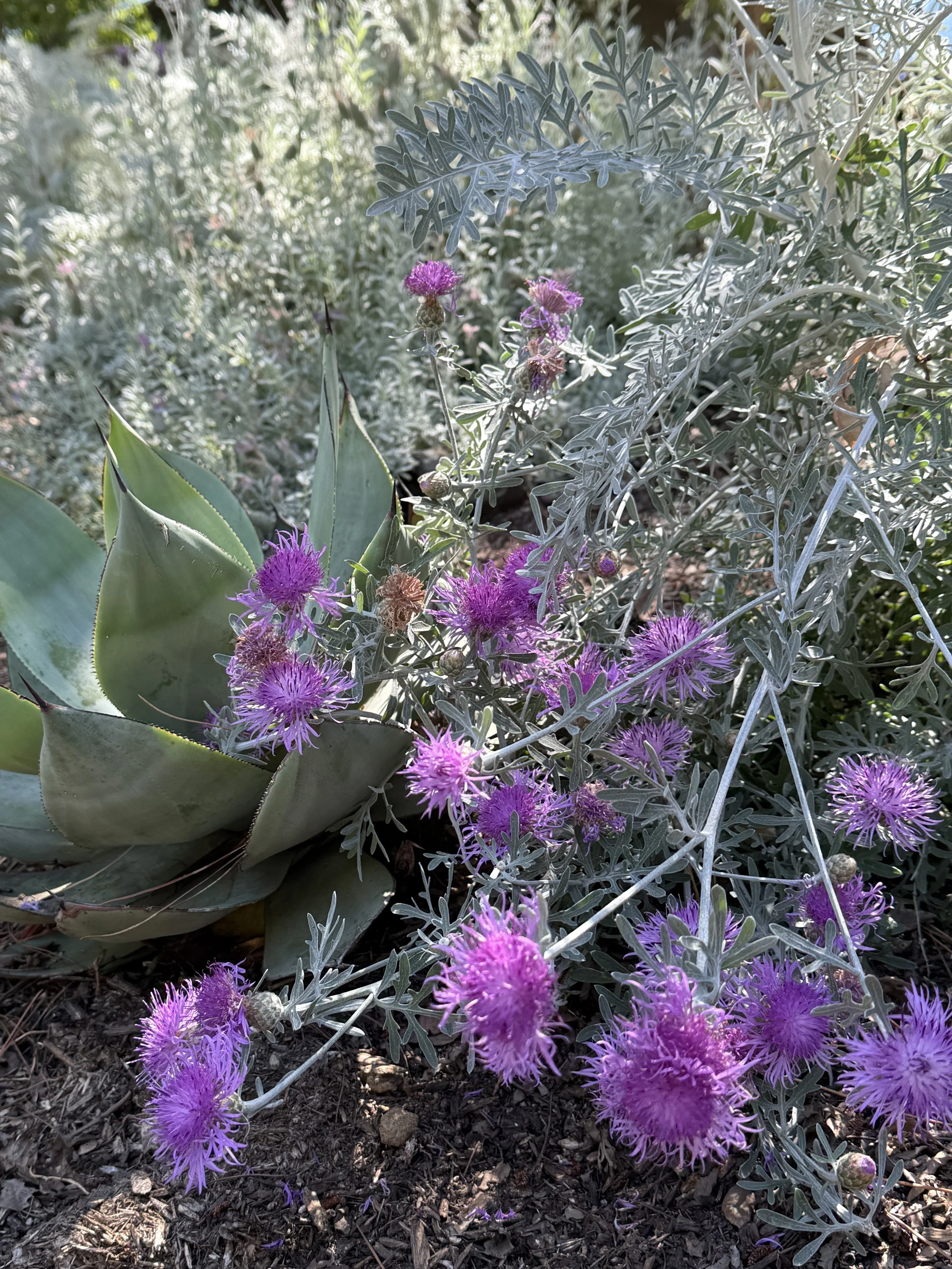
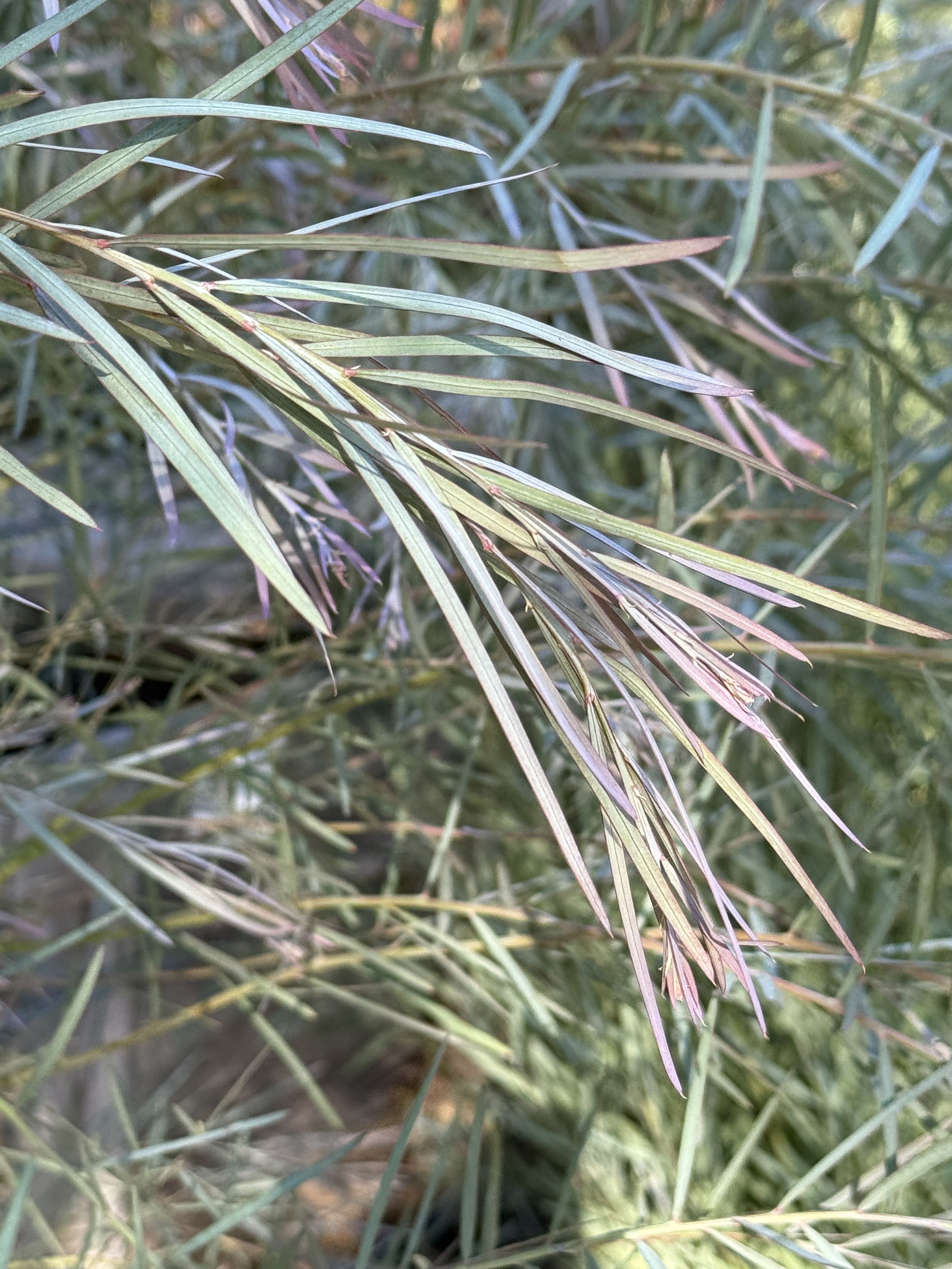
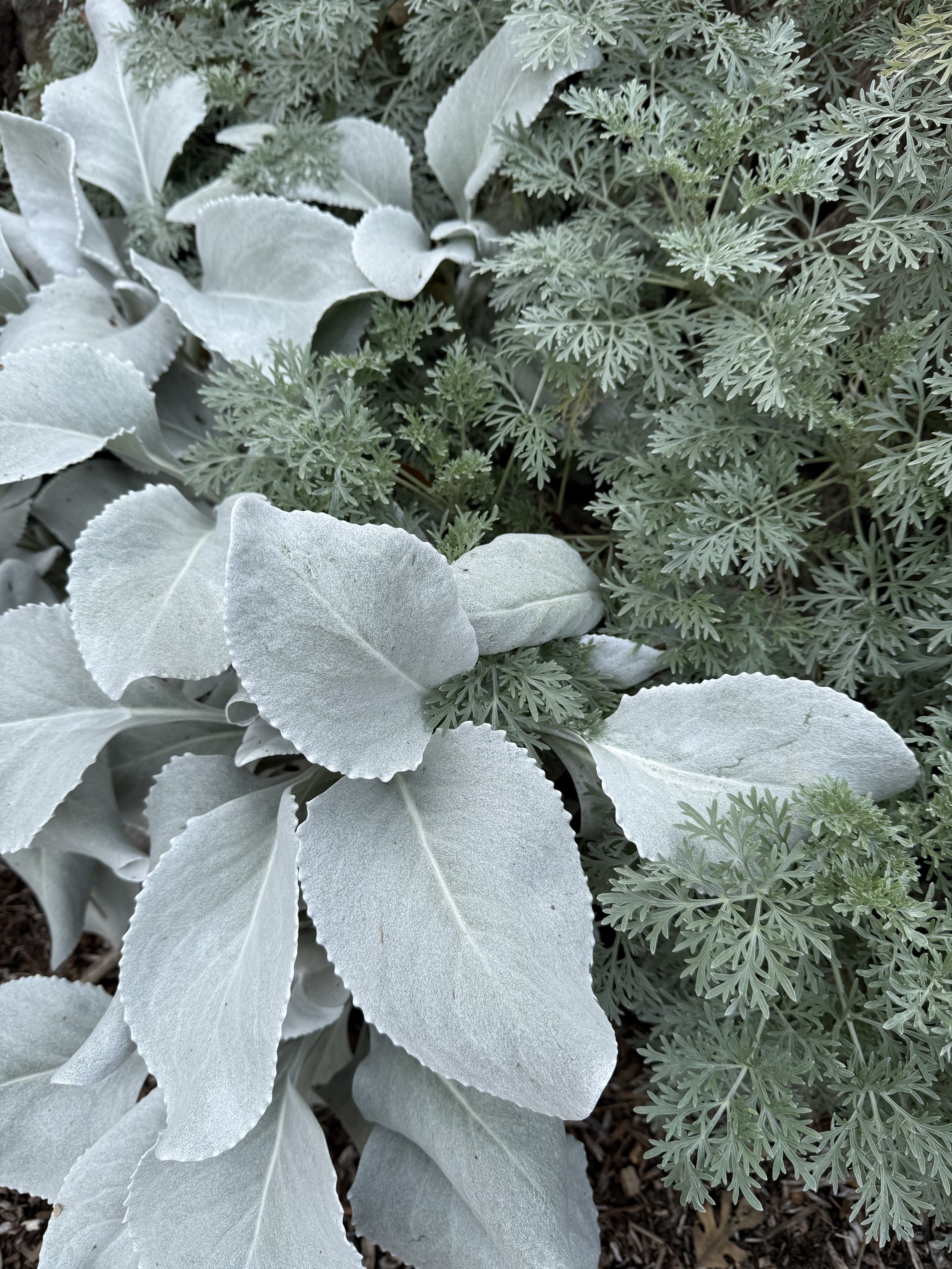
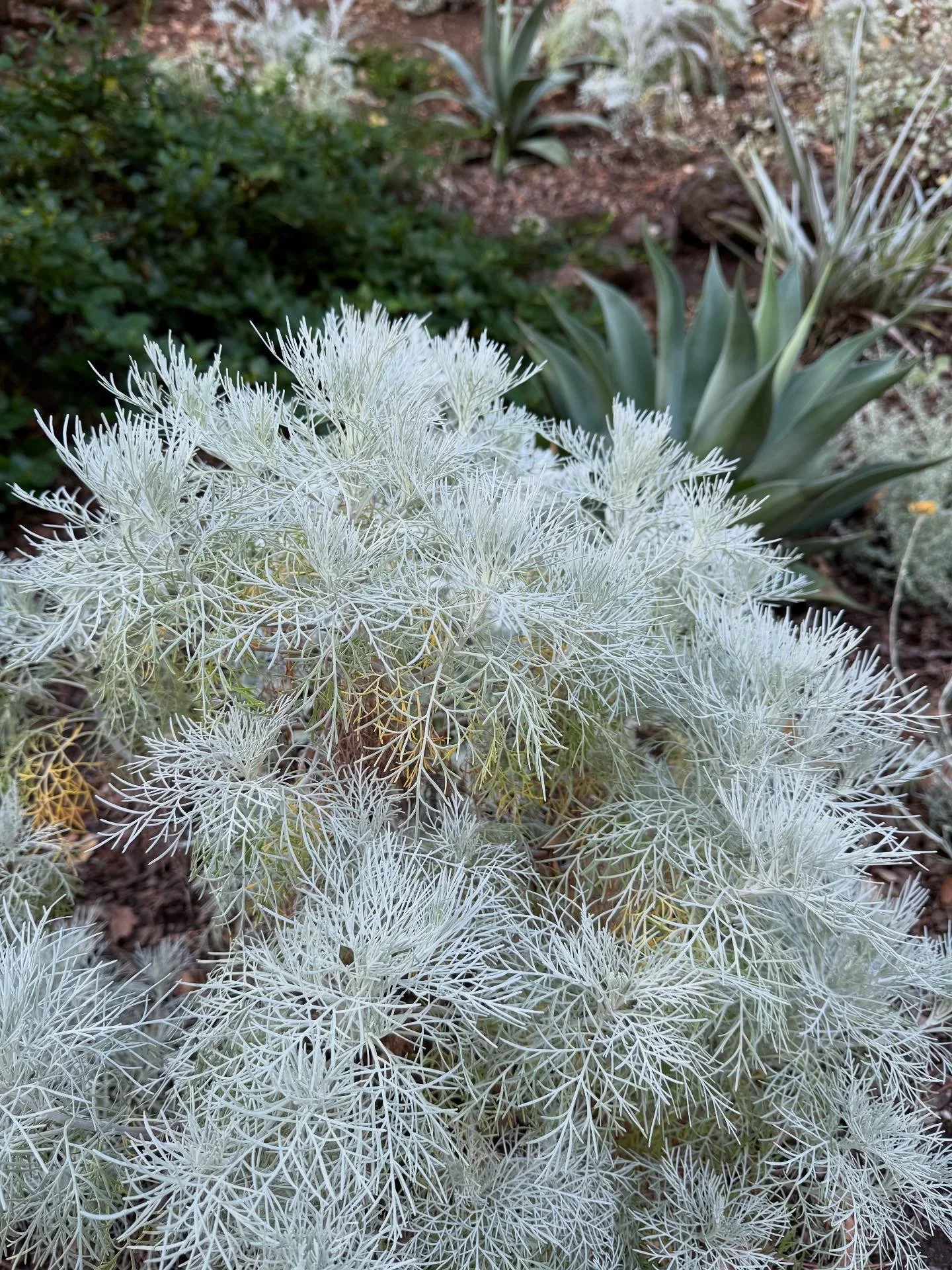
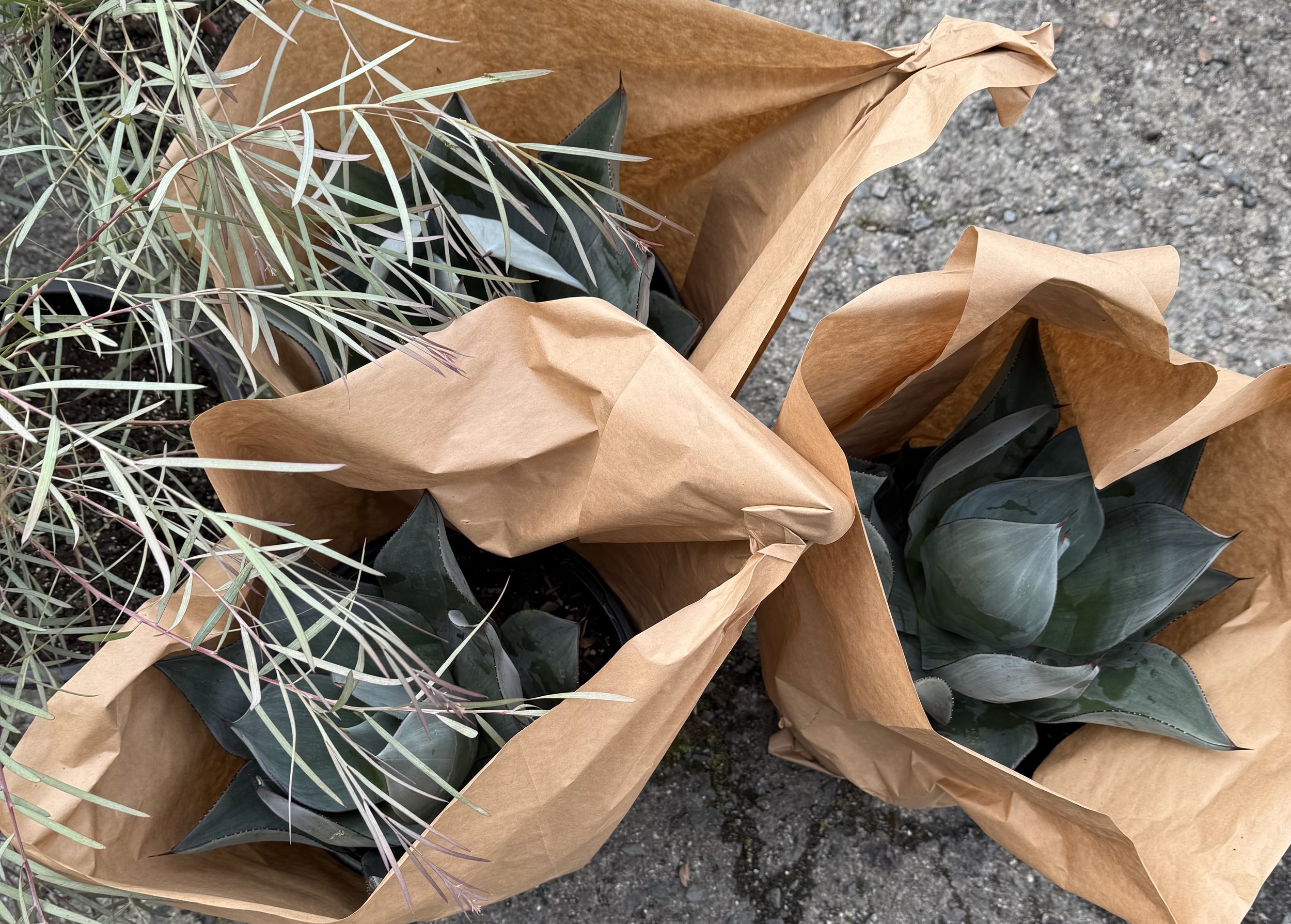
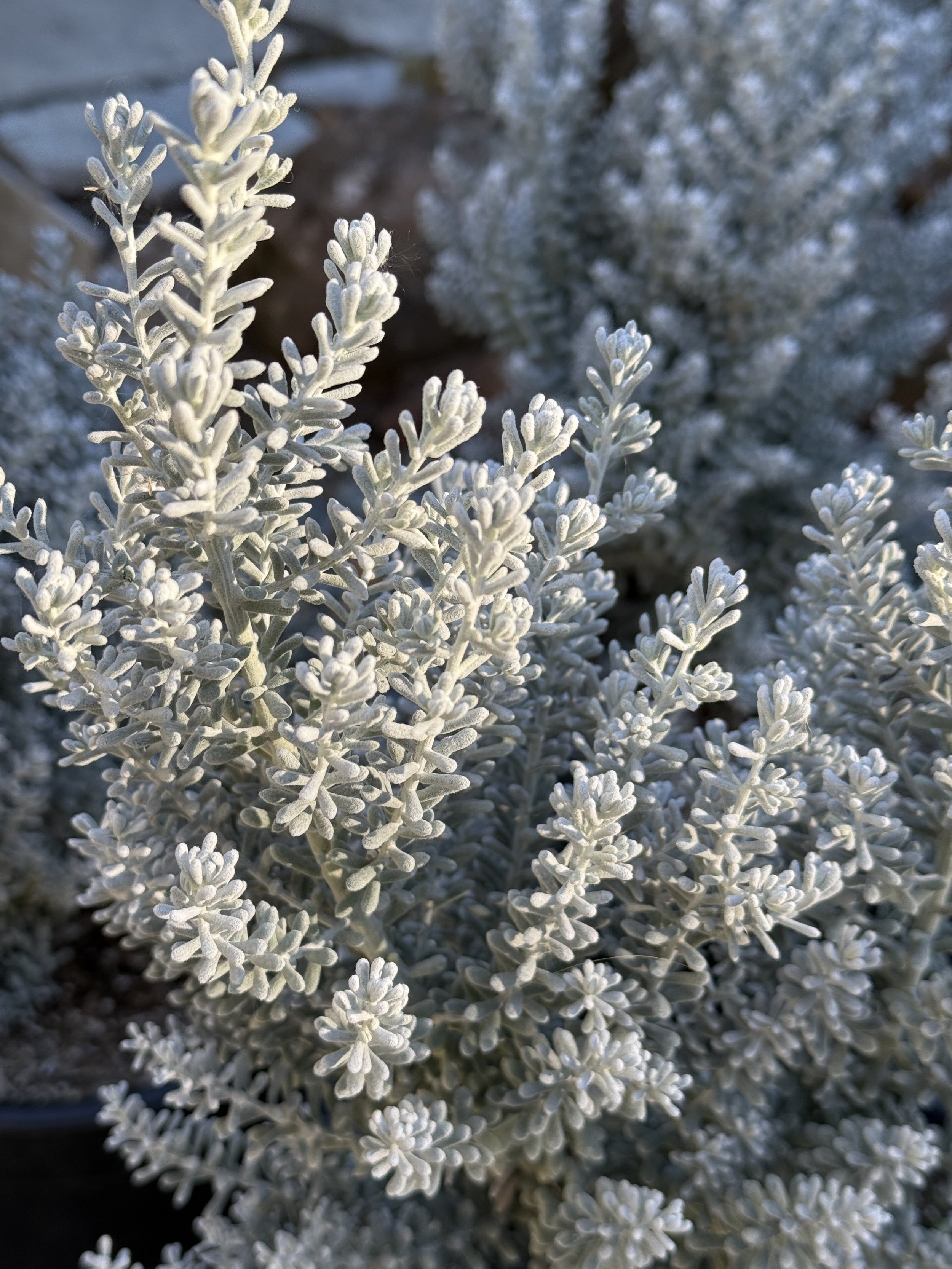
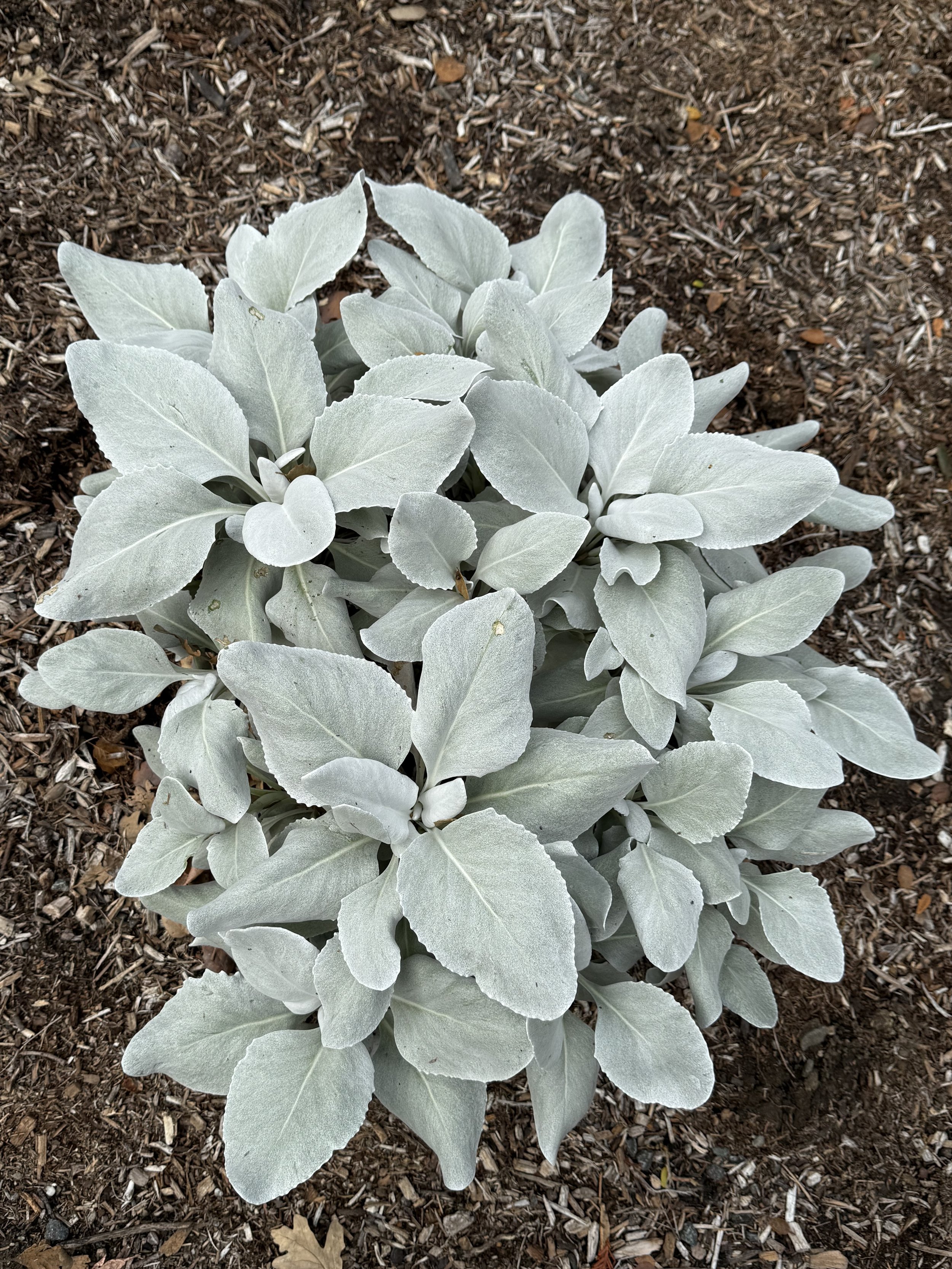
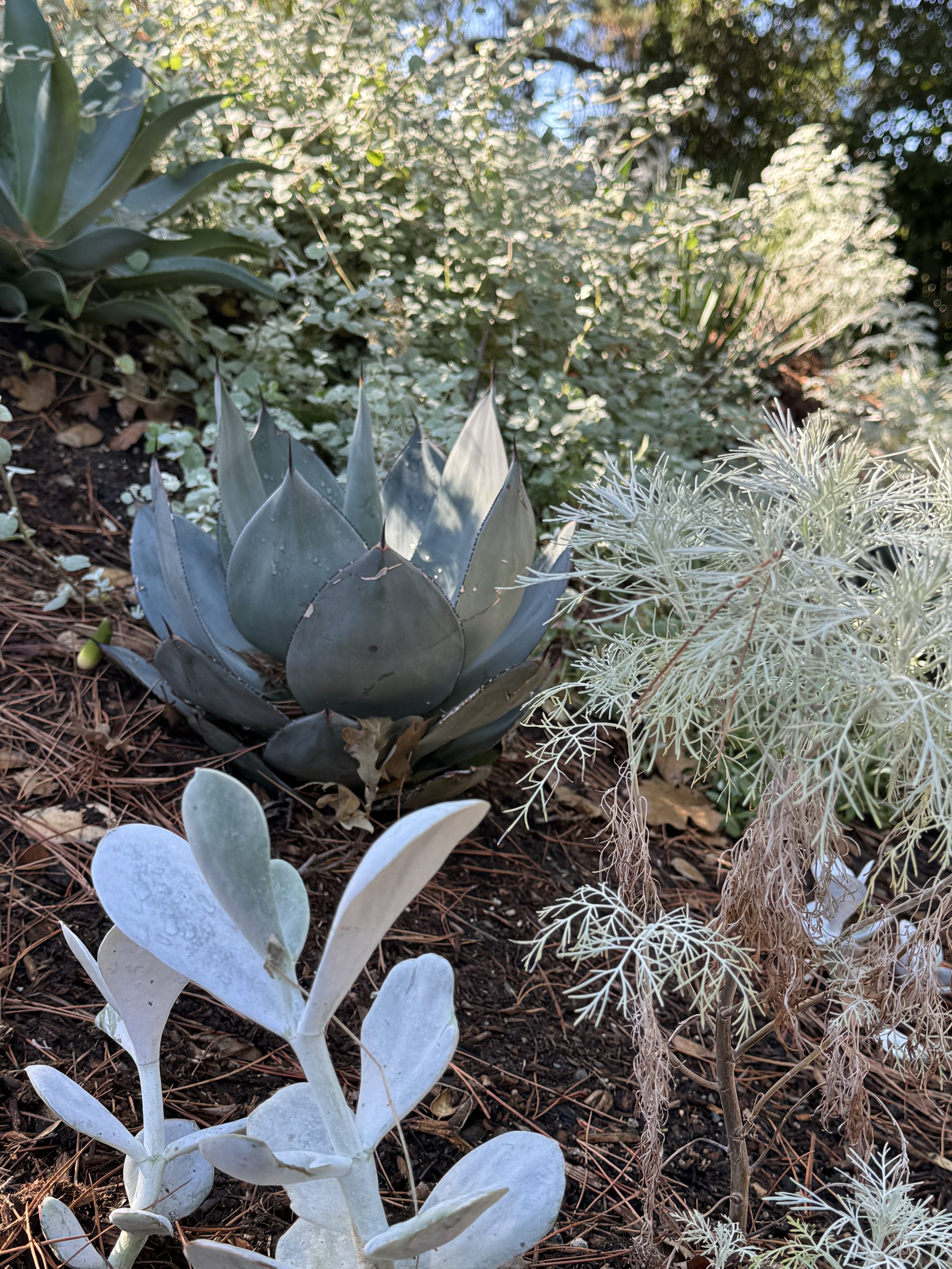
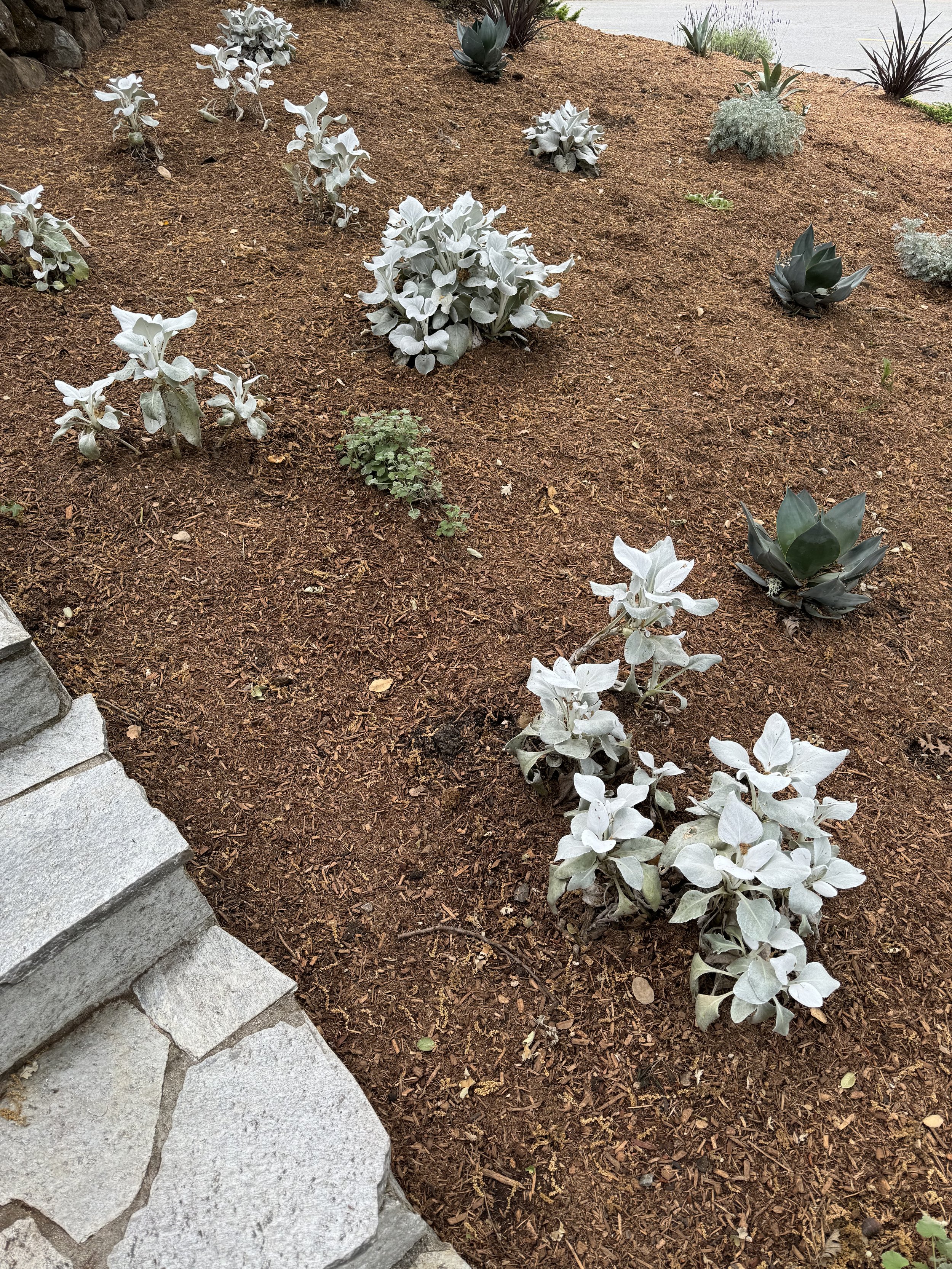
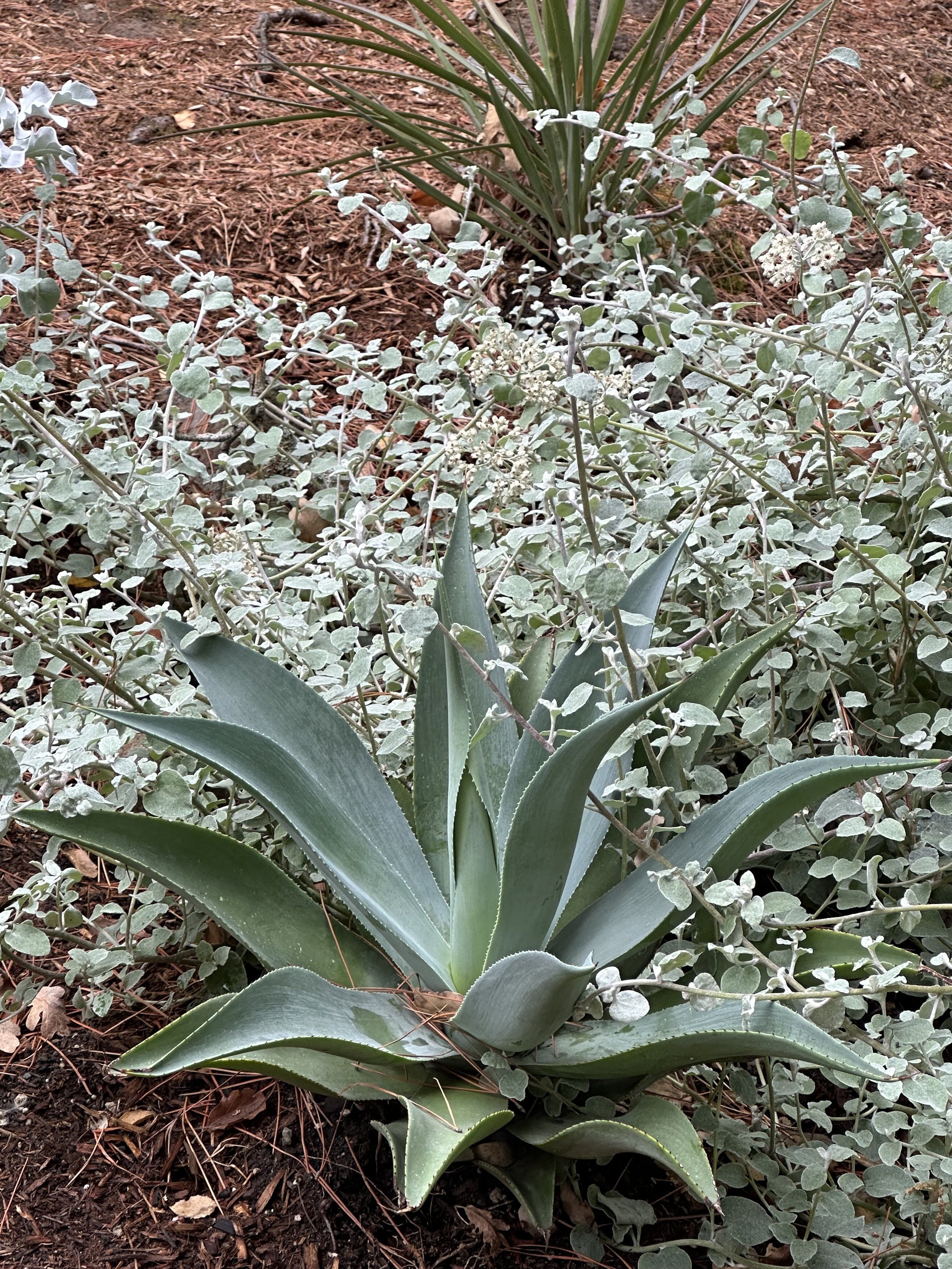
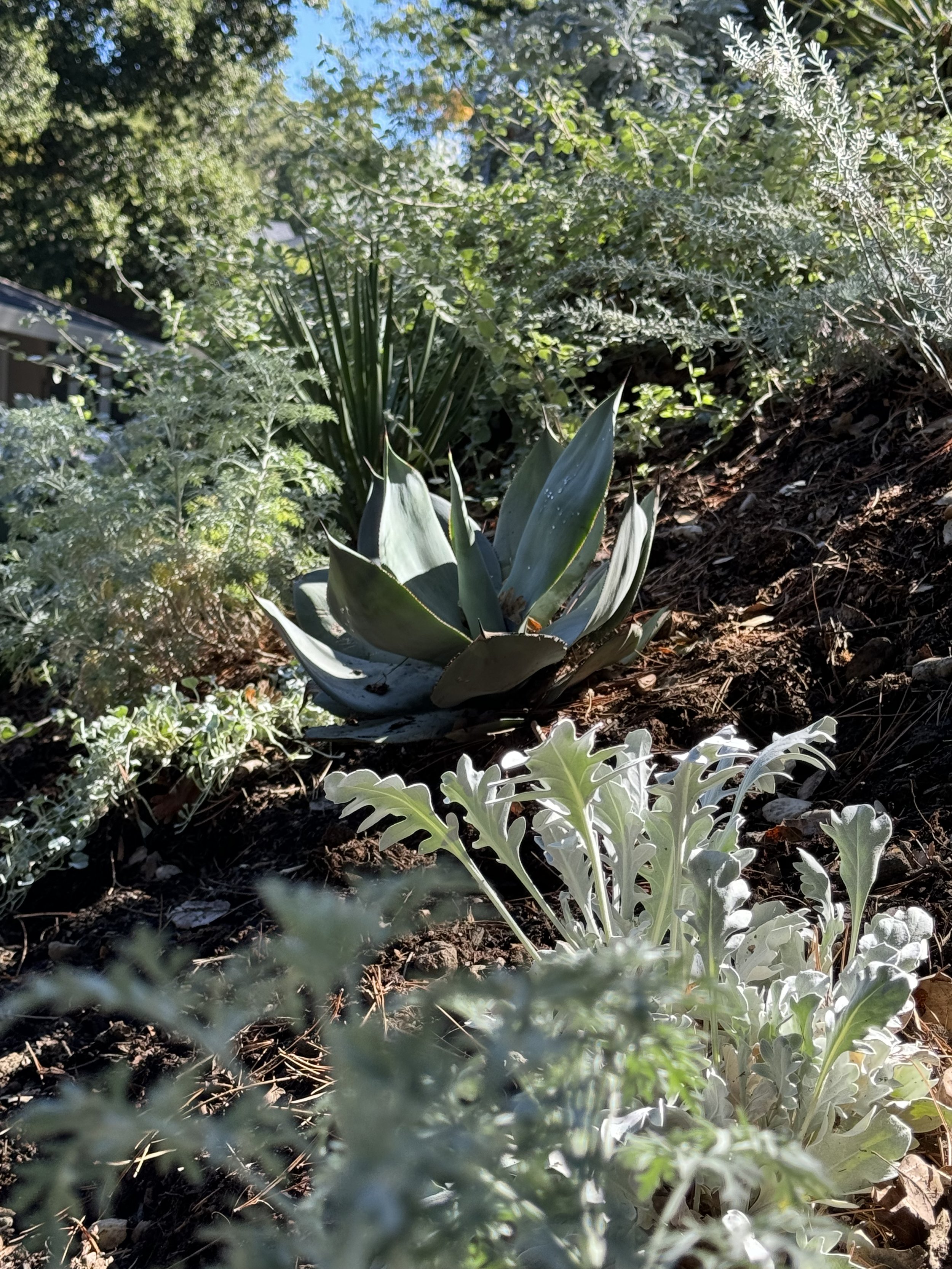
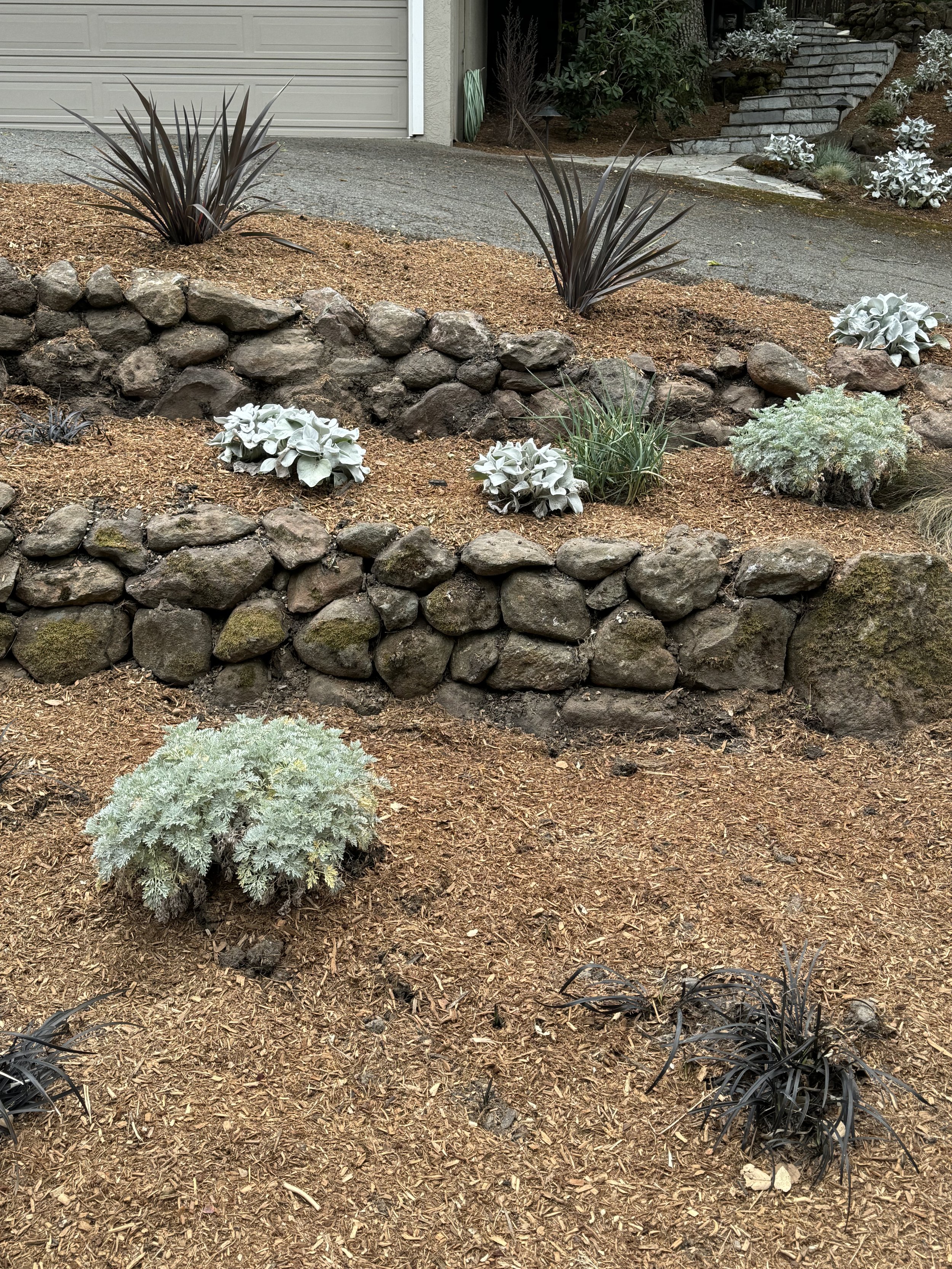
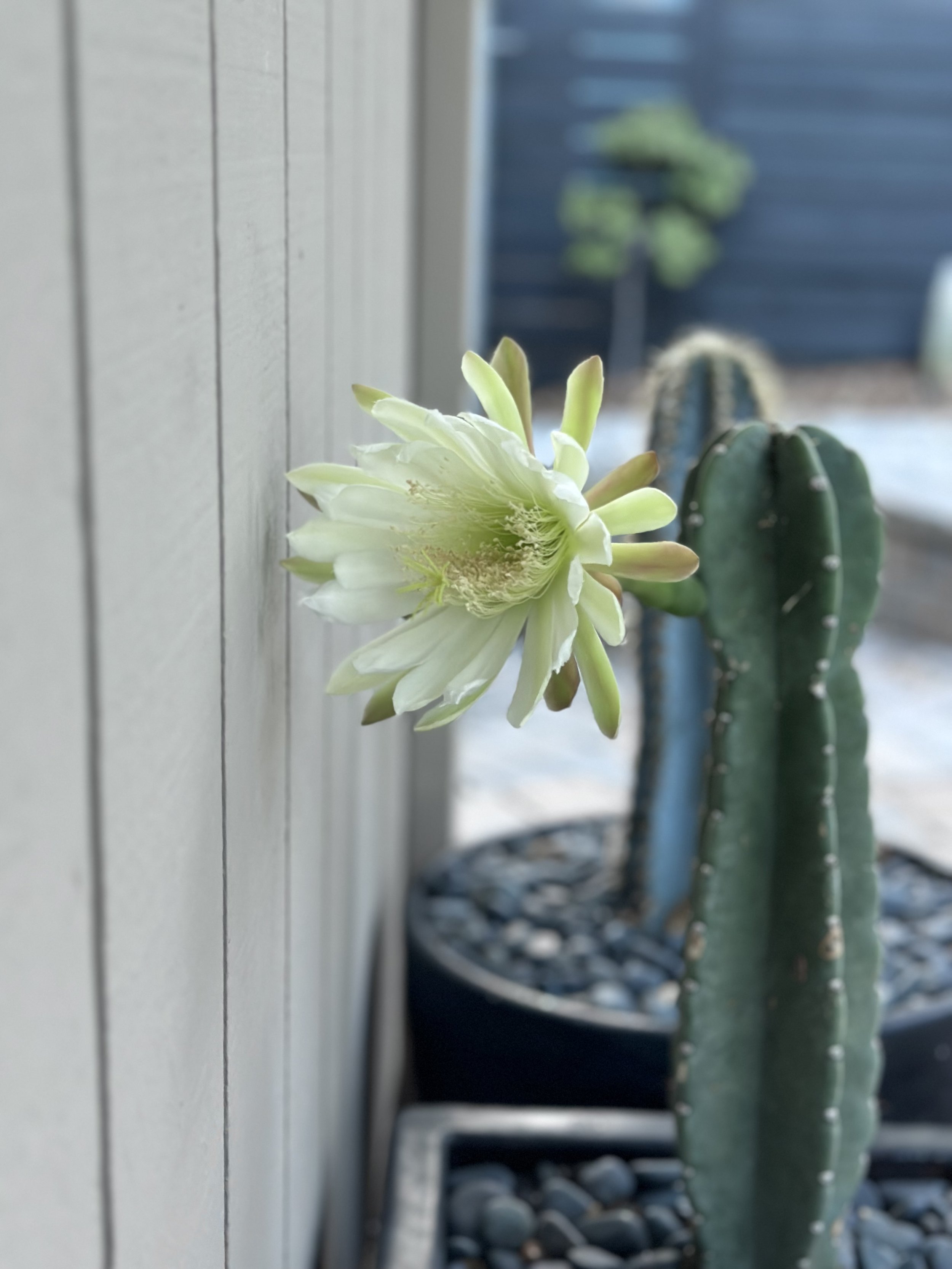
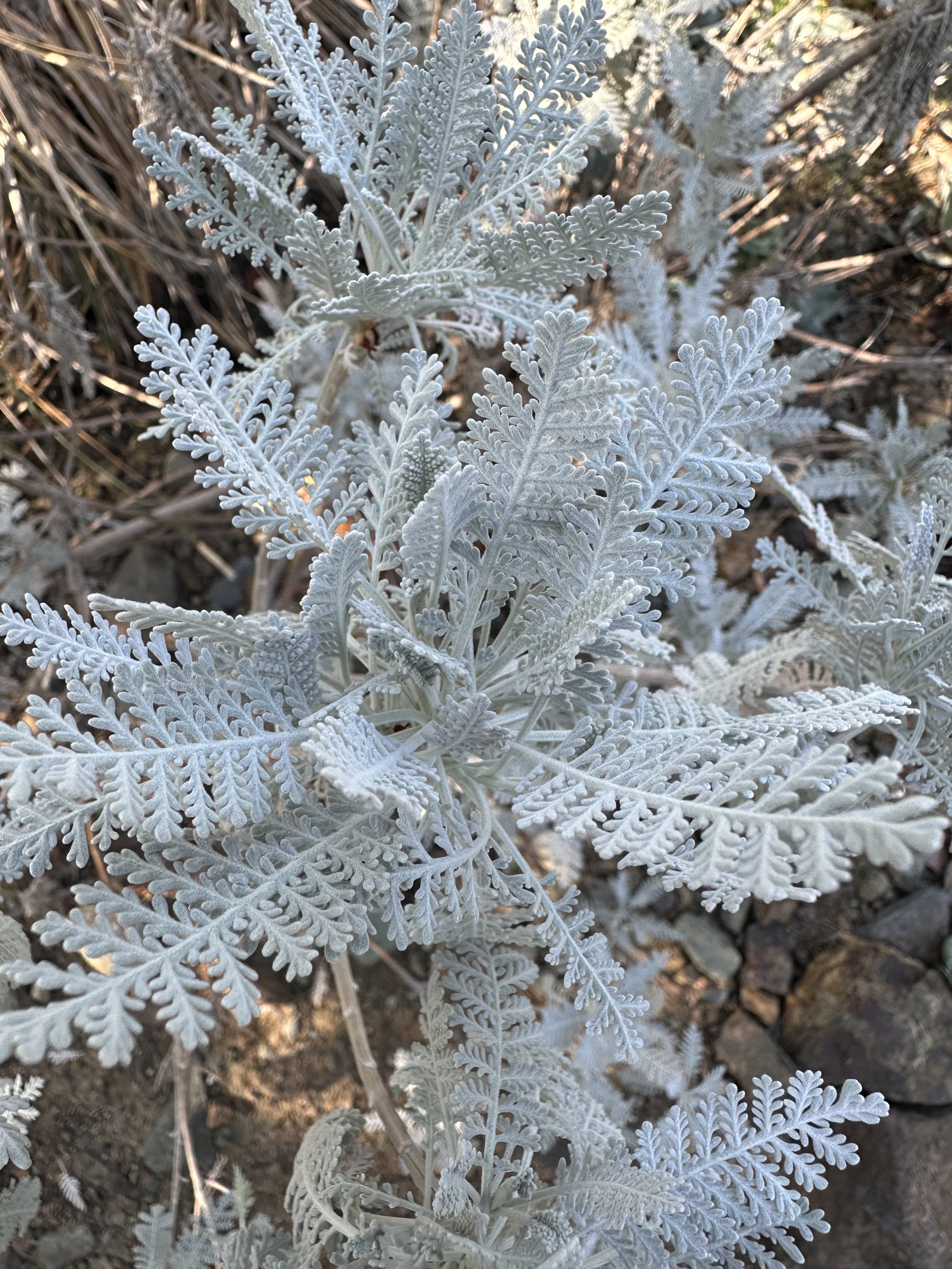
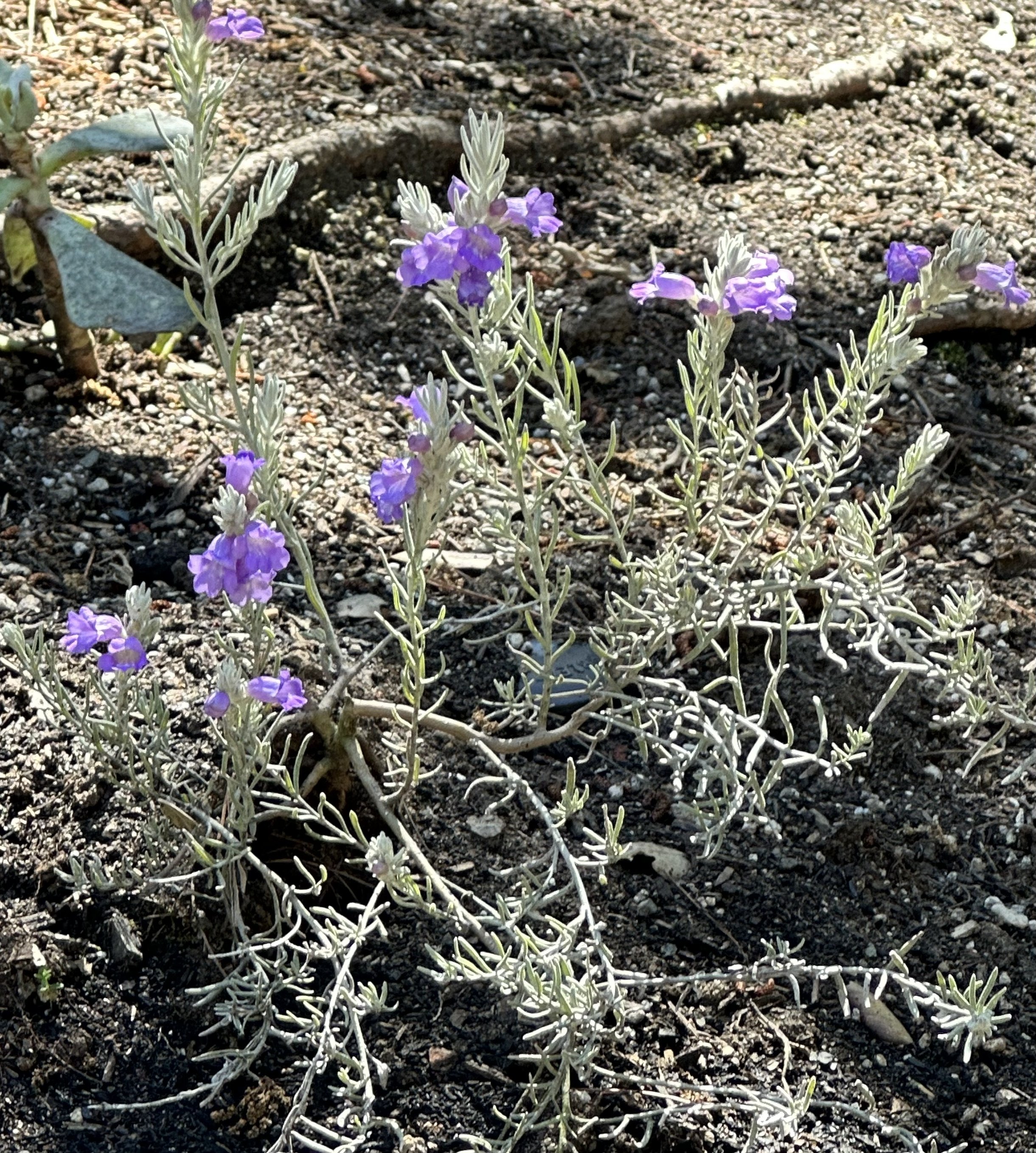
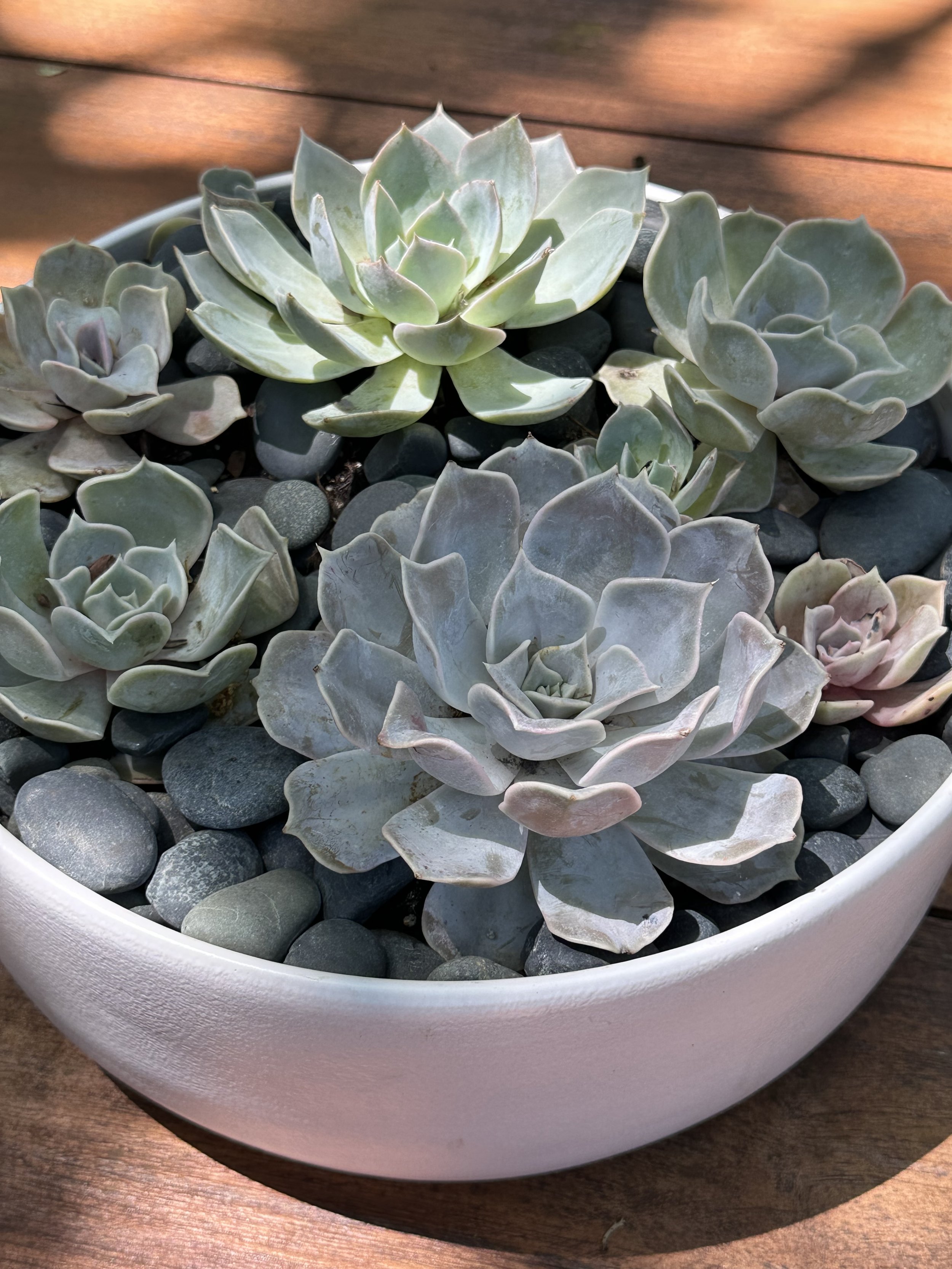
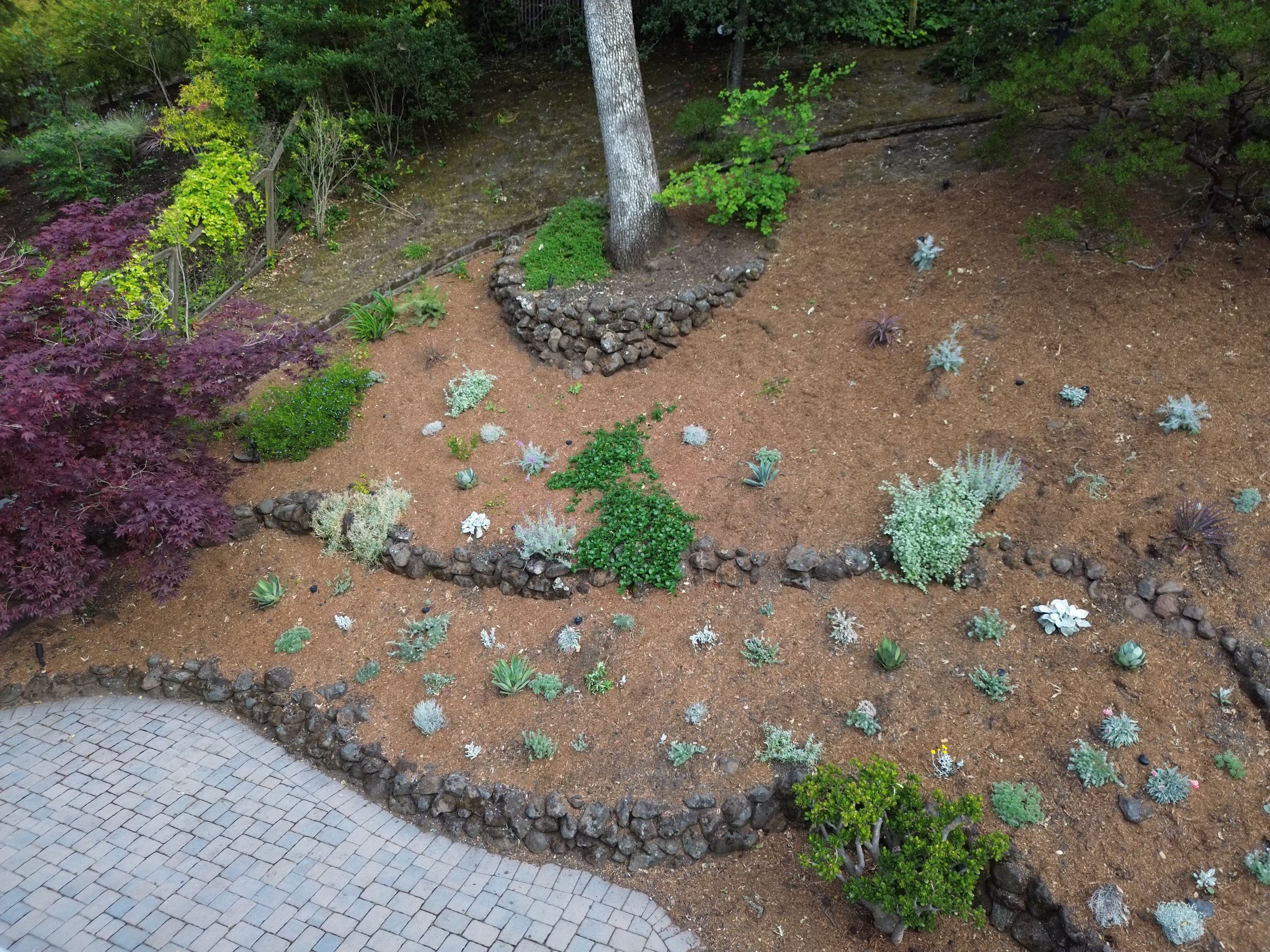
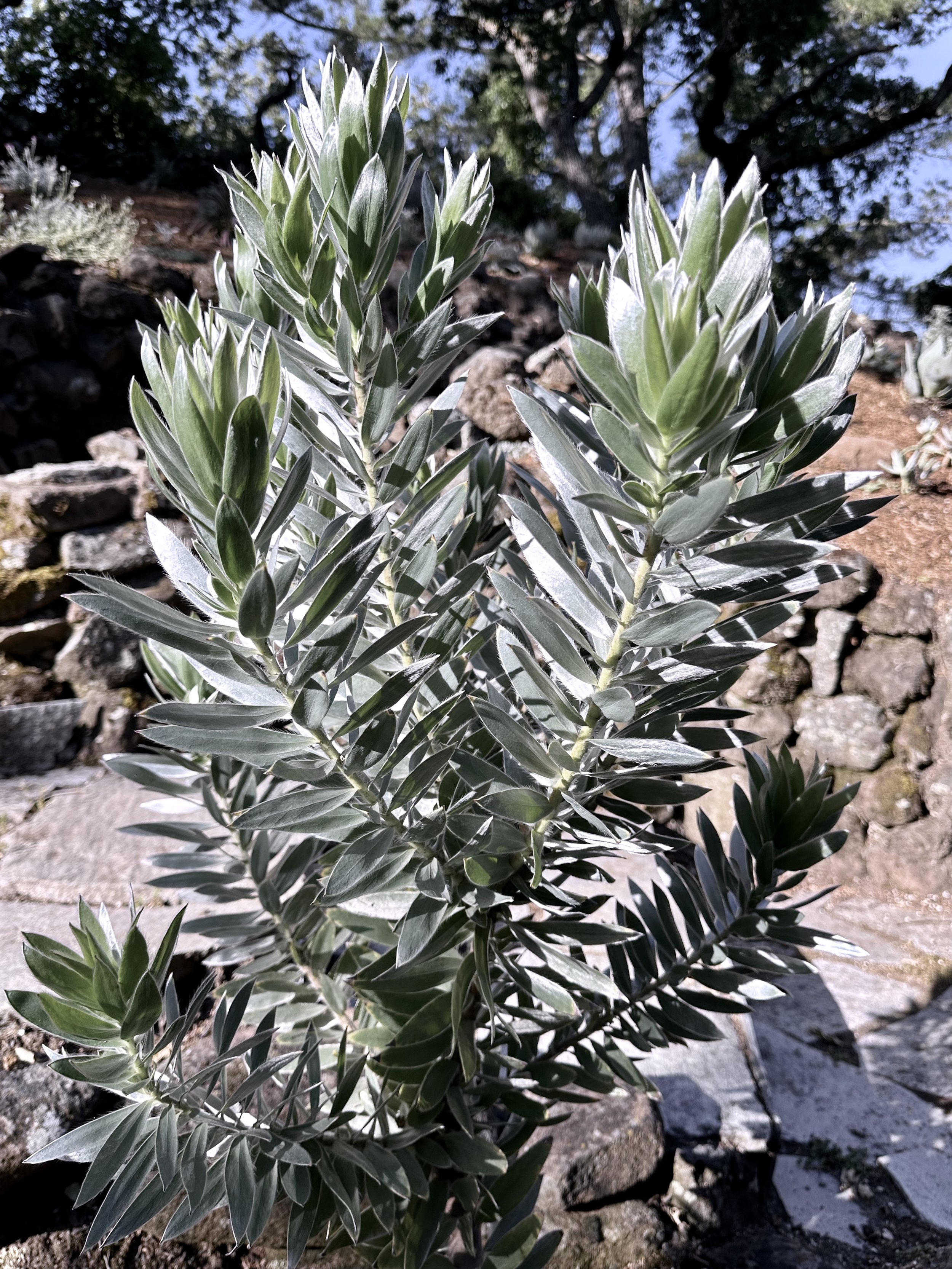
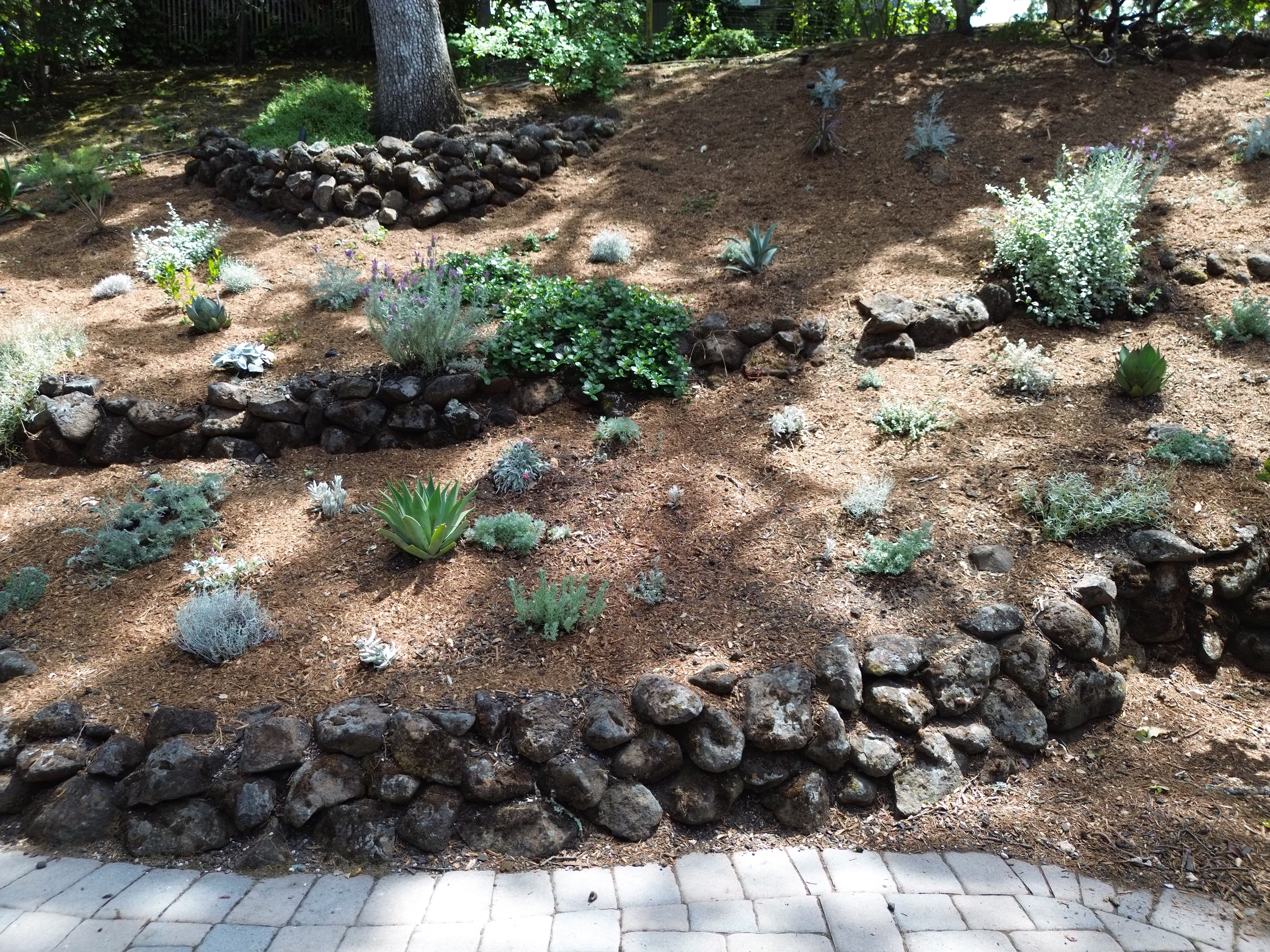
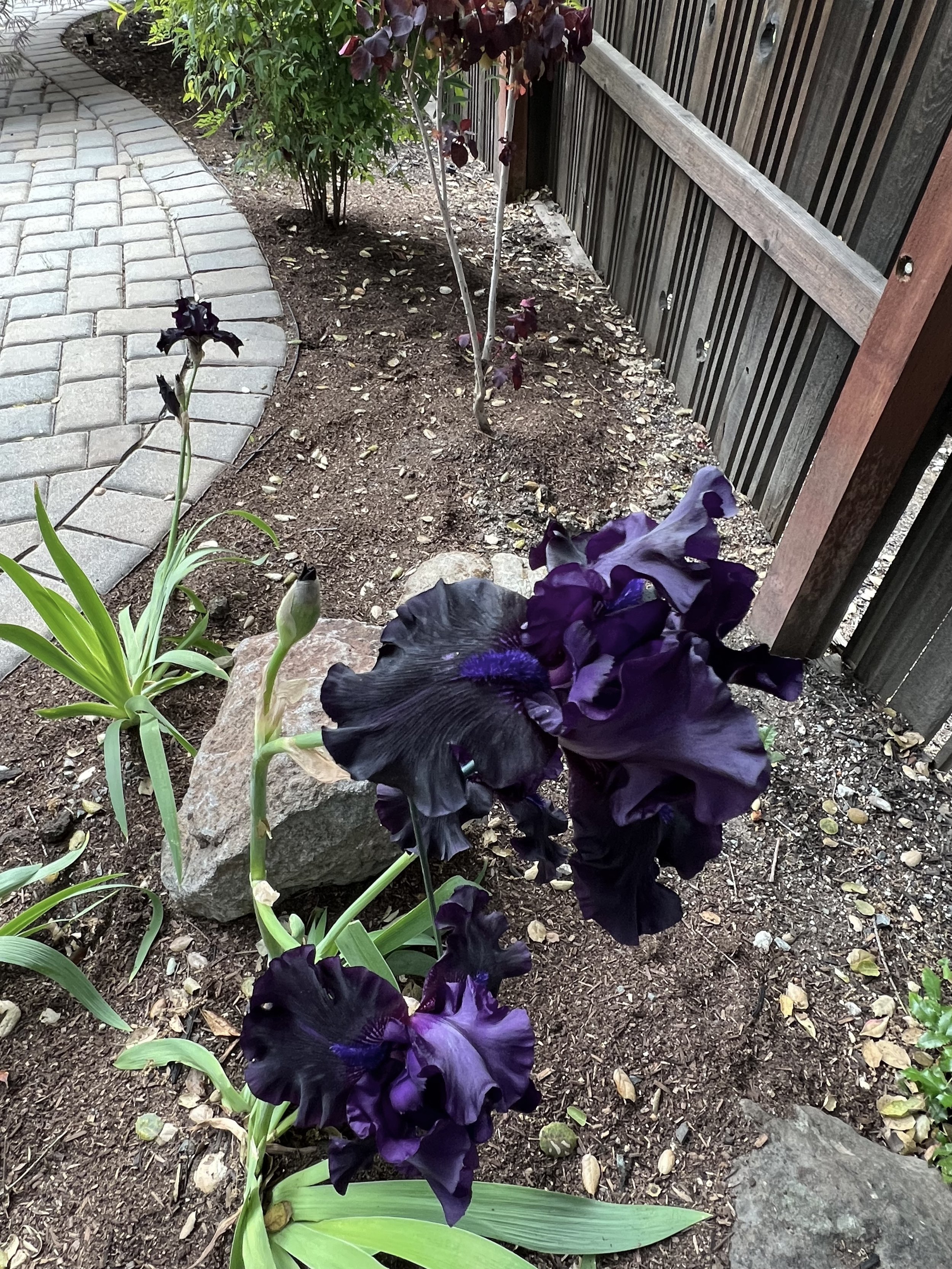

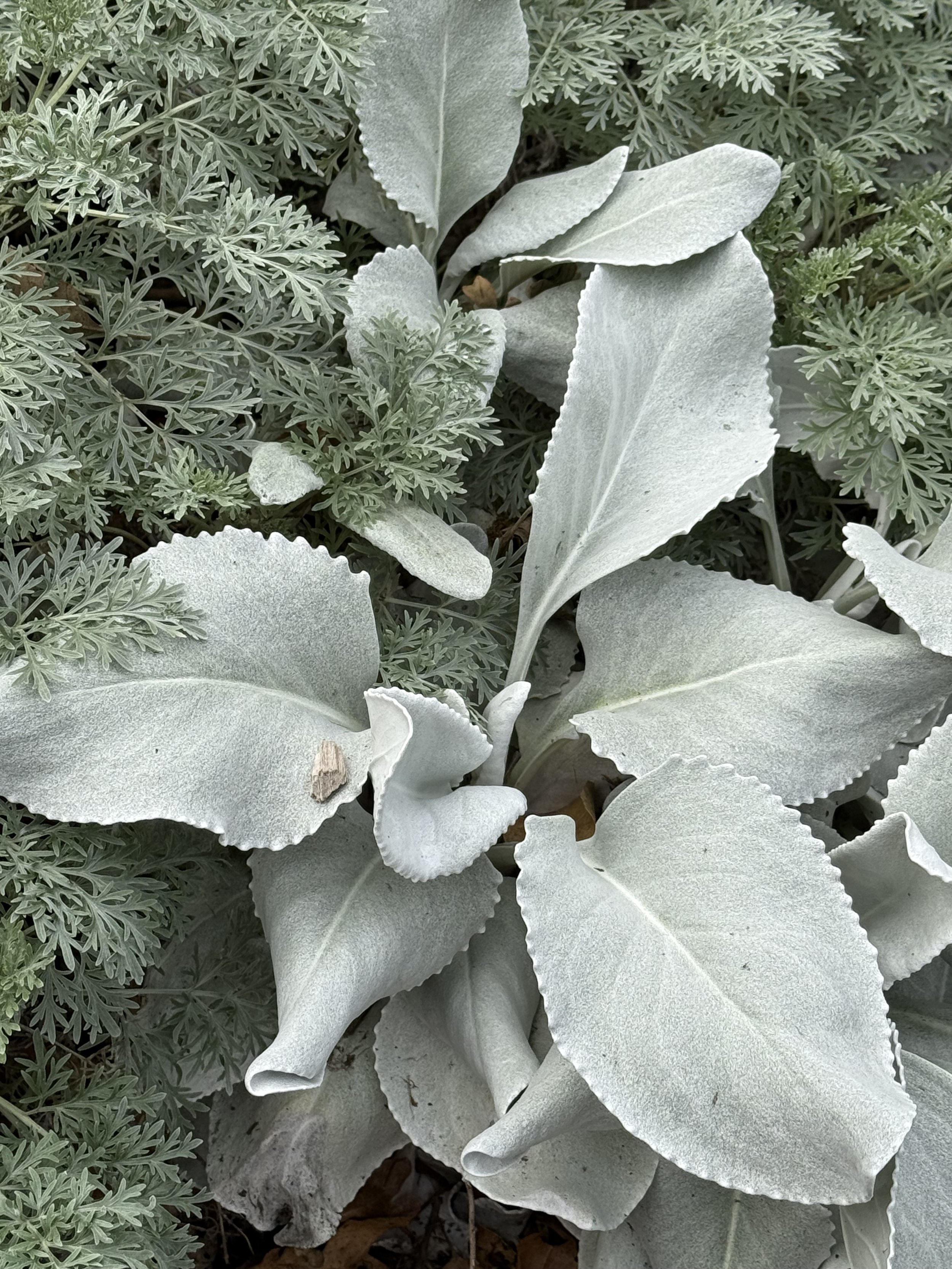
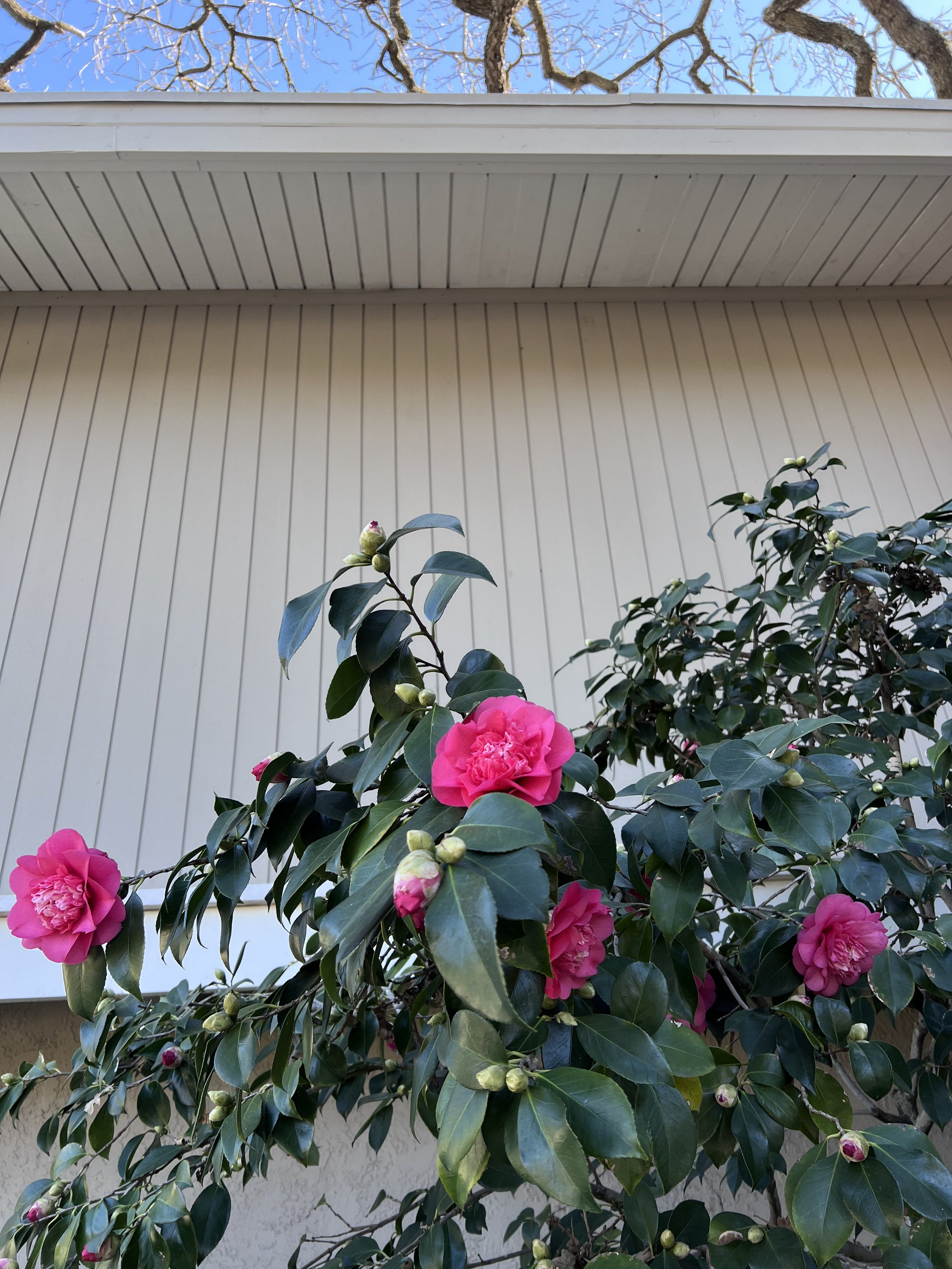
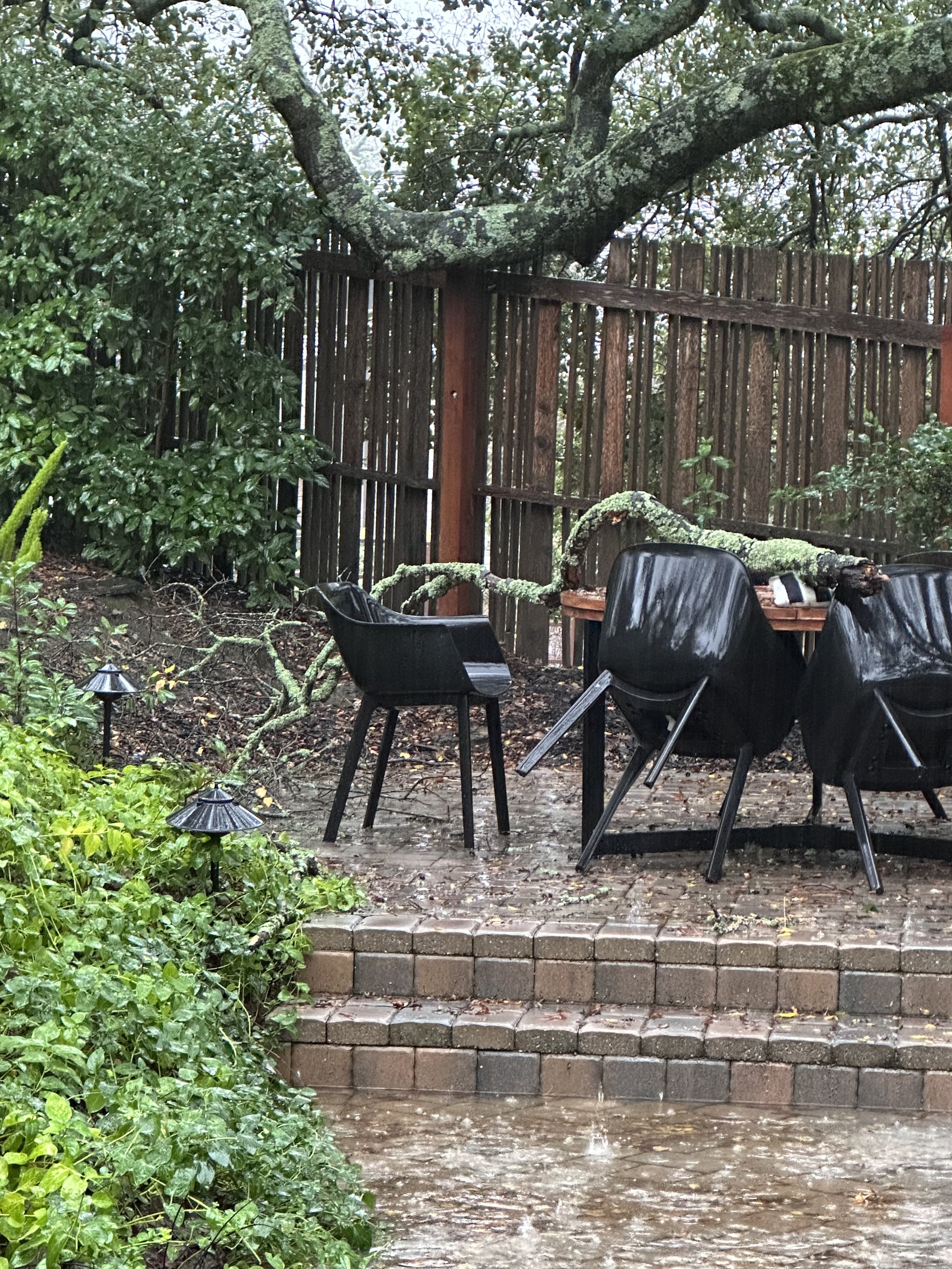
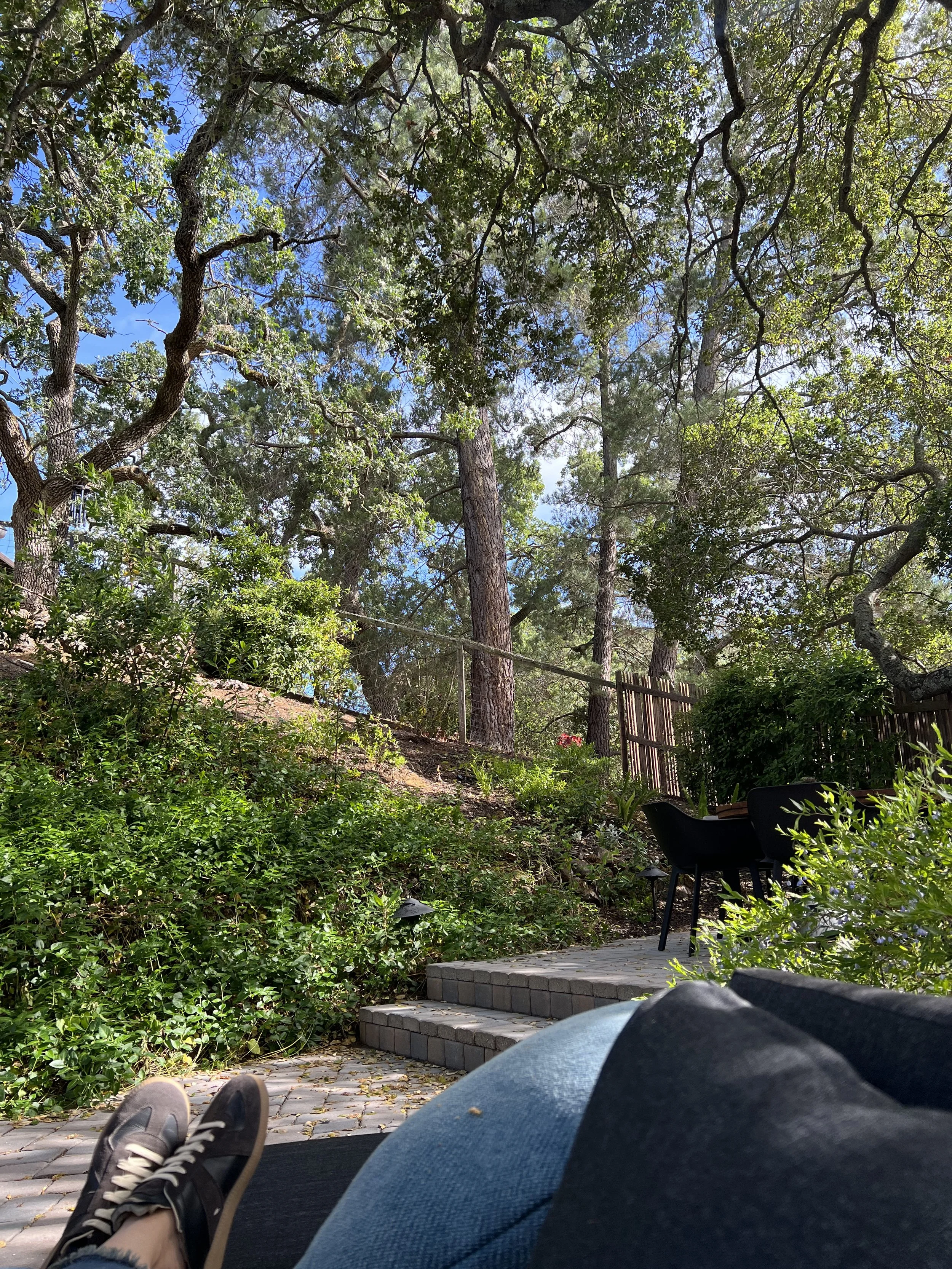
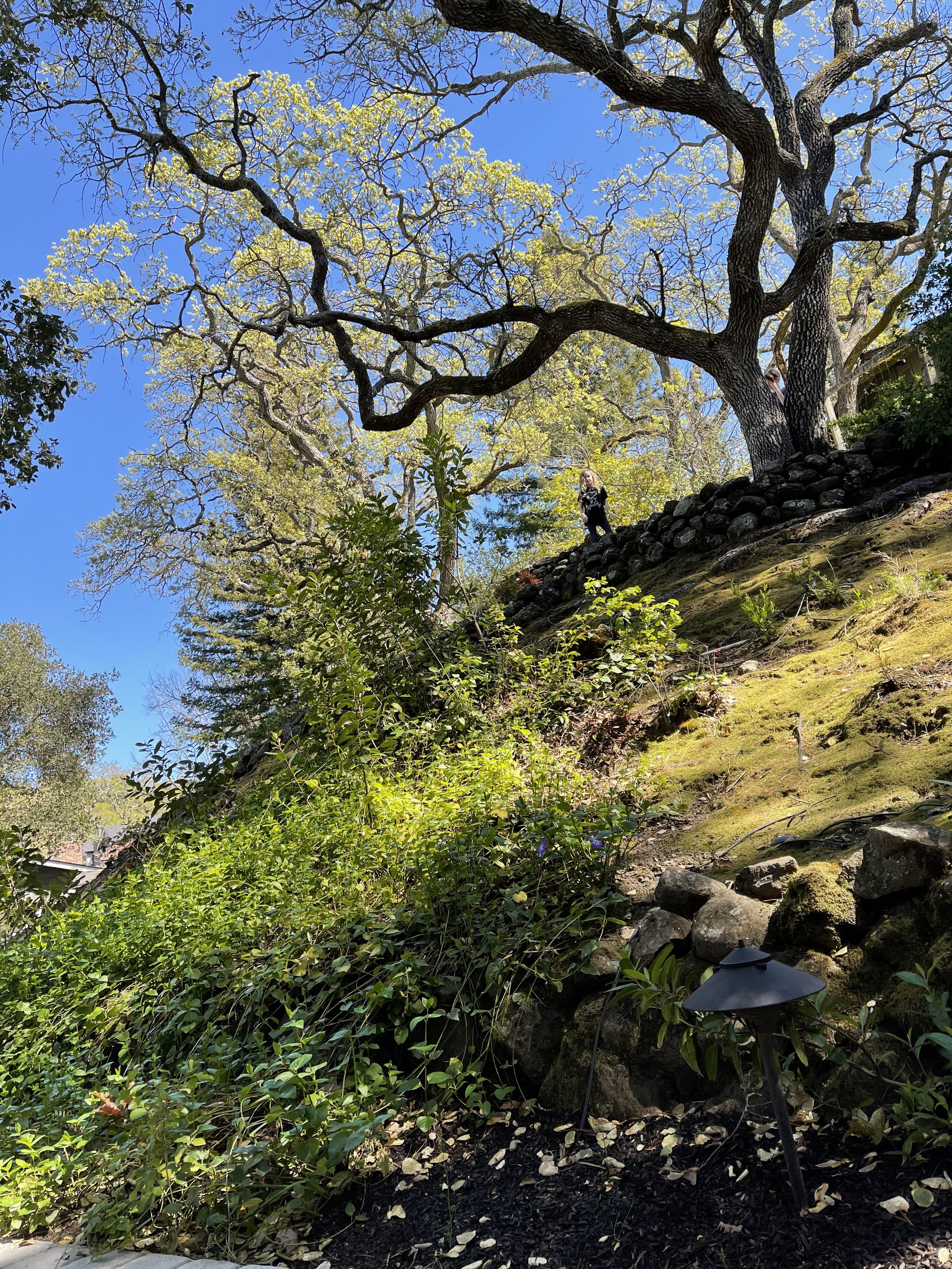
From the founder’s current garden — the studio’s ongoing home lab…
A curated modern design in a mostly monochromatic palette — silver, white, frosty blue, occasionally punctuated by deep burgundy and black. Cool, serene tones: Agave, Artemisia, Kalanchoe, Senecio, and other rare beauties.
After a decade of experimental (and limited) landscaping at rented houses, I’d finally been given the chance to go deeper. The plants moved before the furniture did. I selfishly dug up a Leucadendron argenteum from our last Eichler and brought it along — only to confirm that they really don’t like having their roots disturbed. I tucked in some Aeoniums I’d brought with me, and started daydreaming.
At first it was freestyle. I climbed the steep hillside and dug where the drought-hardened soil allowed. Mostly on my own. I convinced the family to help spread mulch once.
The priority was to preserve what was worth saving — decades-old Japanese maples, manzanita, ceanothus, and ribes, all under a canopy of twisted, moss-covered heritage oaks. The 20-foot Camellia trees against the lower house had to go, along with some rhododendron and way too much juniper.
Winter rains softened the soil. I pulled the invasives, amended what I could, and spent a few years studying landscape design while using the yard as a lab. Hardscape stayed largely as-is, with gentle DIY repairs. (Though I do quietly daydream about ORCA Brick Clay Pavers for the driveway someday.) I painted the existing fence black — a much bigger job than I expected, and 100 percent worth it. A non-functional dry creek across the front hillside was a few days’ work to repurpose, the rocks relocated under the entry deck.
Five years in, the garden is still evolving — that’s the point. There’s always something. Recently I planted something hard to find that I suspect could become a next obsession, the kind of plant I’ll start specifying in client projects once it’s more readily available. The home lab is doing what it’s supposed to.
This garden is what inspired the career change. The coolest part of being a landscape designer is having so many ideas for palettes and spaces, and getting to realize them eventually — somewhere, somehow. The spaces outside our homes are extensions of the rooms inside. Living in California amplifies it.


